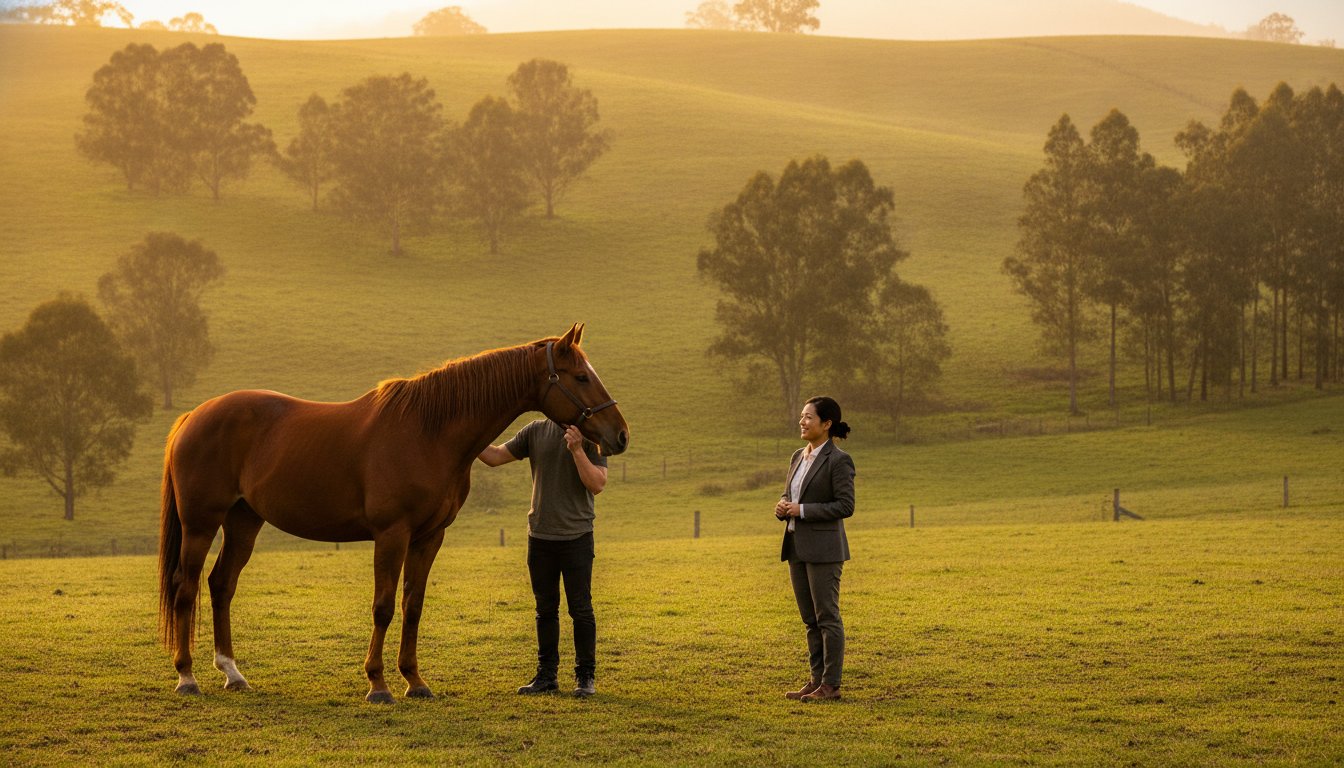

What if the most profound clinical progress doesn’t occur within the four walls of a sterile office, but in the rhythmic presence of a horse and the stillness of the Melbourne hills? For many people, traditional talk therapy can lead to a sense of clinical burnout, leaving you feeling more like a case file than a human being seeking connection. It’s frustrating to search for NDIS-funded respite that offers genuine therapeutic depth rather than just a simple change of scenery. We understand that true recovery requires a setting where you feel both psychologically safe and professionally supported.
By choosing a therapeutic farm stay Victoria residents can access a structured, clinical approach to healing that integrates professional counselling with equine-assisted therapy. This article will show you how these nature-based interventions support NDIS capacity-building goals and provide a restorative path to mental health recovery. We’ll look at the rigorous standards behind these services and explain how the farm environment serves as a powerful catalyst for emotional regulation and self-discovery. You’ll discover how a deliberate break from the city can lead to lasting, measurable progress on your journey toward wellbeing.
Key Takeaways
- Understand how a therapeutic farm stay Victoria provides a structured clinical alternative to traditional office-based therapy through professional, nature-based interventions.
- Discover the role of horses as intuitive co-facilitators in the healing process and how the “Horse Sense & Wisdom” framework builds essential emotional regulation skills.
- Learn how to utilise NDIS funding for therapeutic respite, including Short-Term Accommodation (STA) and Capacity Building supports for professional sessions.
- Explore the features of a safe, clinical retreat in Upper Beaconsfield, where every aspect of the 21-acre environment is curated to support your psychological safety.
- Gain clarity on the intake process required to ensure your stay is purposeful, goal-directed, and perfectly aligned with your personal recovery journey.
Beyond the Clinic Walls: The Rise of Therapeutic Farm Stays in Victoria
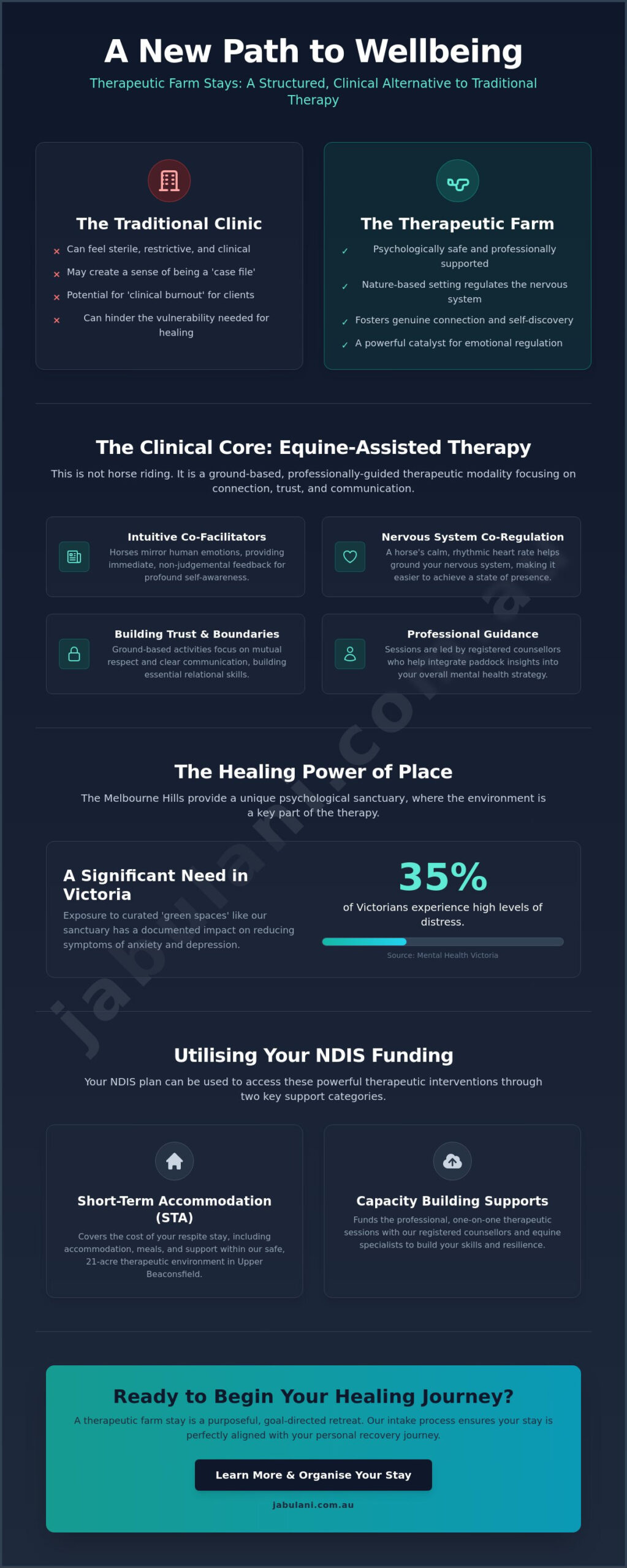
A therapeutic farm stay Victoria isn’t simply a trip to the country with a few animals nearby. It’s a structured, professional intervention that takes place within a rural setting, specifically designed to bridge the gap between clinical support and natural restoration. While traditional talk therapy remains a cornerstone of mental health, the environment in which that therapy occurs can significantly impact its effectiveness. For many people, the “four walls” of a standard medical clinic can feel restrictive or even clinical in a way that triggers a sense of being “watched” or “assessed.” This can hinder the vulnerability required for genuine trauma recovery.
Stepping into a farm environment changes the power dynamic of the therapeutic relationship. The Victorian landscape provides constant, gentle sensory input that helps regulate the nervous system. Whether it’s the scent of damp earth after rain or the rhythmic sound of a horse grazing, these elements offer a “grounding” effect that a sterile office cannot replicate. Stays of this nature are built for deep, intentional work, ensuring that the peaceful surroundings serve as a catalyst for healing rather than just a backdrop for a holiday.
The Difference Between a Holiday and a Therapeutic Retreat
It’s easy to confuse a rural getaway with a clinical retreat, but the distinction lies in intentionality. A holiday is about escaping your life; a therapeutic retreat is about equipping you to return to it. While recreational farm stays focus on leisure, a clinical stay incorporates registered counsellors and evidence-based modalities like Equine-Assisted Therapy. Therapeutic farm stays are evidence-based nature interventions that align with specific NDIS capacity-building goals and professional mental health frameworks.
Why the Melbourne Hills Offer the Perfect Healing Backdrop
The temperate climate and lush greenery of the Melbourne hills, including areas like Upper Beaconsfield, provide a unique psychological sanctuary. Data from Mental Health Victoria in late 2025 showed that 35% of Victorians experience high levels of distress. Exposure to these specific “green spaces” has a documented impact on reducing anxiety and depression symptoms by lowering cortisol levels. For Melbourne residents, the proximity of these hills is vital. It allows for a complete shift in environment without the added stress of long-haul travel, making the transition into a healing headspace much smoother.
The Clinical Core: Integrating Equine-Assisted Therapy into Your Stay
At the heart of a therapeutic farm stay Victoria experience is a sophisticated clinical framework that distinguishes it from a standard rural visit. While the peace of the countryside is inherently relaxing, the true healing occurs through a structured partnership between the client, a registered counsellor, and the horse. Horses are uniquely suited to this role because they are prey animals with highly evolved nervous systems. They don’t just exist in the paddock; they act as co-facilitators by sensing and mirroring human emotional states with remarkable precision. This immediate feedback loop allows for a level of self-awareness that often takes months to achieve in traditional office-based settings.
It’s vital to understand that these sessions are not about recreational horse riding. In fact, all work is conducted from the ground to foster a genuine relational connection. By removing the power dynamic of riding, the focus shifts entirely to mutual trust, boundaries, and communication. Every interaction is guided by a registered counsellor who ensures that the metaphors discovered in the paddock are safely integrated into the client’s broader mental health strategy. This professional oversight is what transforms a pleasant animal encounter into a rigorous clinical intervention.
How Horses Facilitate Grounding and Presence
Horses possess a large, rhythmic heart rate that can actually influence the heart rate variability (HRV) of the humans around them. When you stand near a calm horse, your own nervous system begins to co-regulate, making it easier to access a state of “presence.” At Jabulani Sanctuary, we use specific grounding techniques that encourage clients to notice the subtle shifts in a horse’s ears or the depth of its breath. These observations serve as a powerful anchor to the present moment, which is particularly effective for those struggling with the racing thoughts associated with anxiety or the dissociation often found in trauma survivors.
Goal-Directed Therapy for Mental Health and Trauma
The “Horse Sense & Wisdom” approach provides a clear structure for building emotional intelligence and resilience. This isn’t just about feeling better in the moment; it’s about developing tangible life skills. Whether addressing PTSD, grief, or chronic stress, the sessions focus on translating paddock experiences into daily reality. For instance, learning to ask a 500kg animal to respect your personal space is a profound lesson in setting healthy boundaries with people. If you’re ready to explore these dynamics further, you might consider booking one of our Individual Equine Assisted Sessions to begin your journey.
Professional standards are the bedrock of our practice. In Victoria, the demand for evidence-based wellness is rising, and we meet this by ensuring all therapists maintain their registration and adhere to strict ethical guidelines. This ensures that every participant feels psychologically safe while they navigate the complex layers of their recovery in a supportive, natural environment.
Navigating NDIS Support for Therapeutic Respite and Farm Stays
Securing funding for a therapeutic farm stay Victoria wide often requires a clear understanding of how the NDIS categorises nature-based interventions. While the NDIS does not have a single line item specifically for “farm stays,” the service is typically structured using a combination of Short-Term Accommodation (STA) and Capacity Building supports. This ensures that the stay is not merely a holiday, but a purposeful, goal-directed clinical intervention that meets the “reasonable and necessary” criteria set by the NDIA. It’s about demonstrating how a change in environment, combined with professional support, directly contributes to your long-term independence and wellbeing.
Understanding STA and Respite Funding
Short-Term Accommodation, often referred to as respite, is designed to support both the participant and their carers by providing a restorative break. In the context of a clinical farm stay, STA funding typically covers the cost of your accommodation, nutritious meals, and the support staff required during your time on the property. To ensure your funding is utilised correctly, the stay must align with your plan goals, such as increasing community participation or building daily living skills. Jabulani Sanctuary is experienced in working with self-managed and plan-managed participants, and we can invoice Plan Managers directly for these eligible services, provided they are included in your current plan.
Linking Therapy to Capacity Building Goals
The clinical component of your stay, such as individual counselling or equine-assisted sessions, is usually funded through the “Capacity Building – Improved Daily Living” budget. This is where the deep therapeutic work described earlier takes place. By linking these sessions to specific goals like emotional regulation, social skills, or trauma recovery, you create a robust case for the clinical necessity of the retreat. Following your stay, a registered counsellor can provide professional reports that document your progress. These reports are invaluable during NDIS plan reviews, as they provide clear evidence of how the therapeutic farm stay Victoria has helped you build capacity and move closer to your desired outcomes.
Before booking your stay, it’s helpful to have a focused conversation with your Support Coordinator or Plan Manager. Use the following checklist to ensure all requirements are met:
- Does my current plan include funding for Short-Term Accommodation (STA)?
- Are my NDIS goals specifically related to emotional regulation, social participation, or independence?
- Is there sufficient funding in my Capacity Building – Improved Daily Living budget for professional counselling sessions?
- Have I confirmed that the provider can invoice my Plan Manager or work within my self-management framework?
- Do I require a formal quote or a service agreement to be drafted before the stay commences?
By approaching the process with this level of clinical and administrative clarity, you ensure that your focus remains where it should be: on your healing and personal growth in the tranquil surroundings of the farm.
What to Expect at Jabulani Sanctuary: Your Retreat in Upper Beaconsfield
Choosing a therapeutic farm stay Victoria offers a unique opportunity to step away from the noise of daily life and into a space specifically designed for profound restoration. Jabulani Sanctuary is situated on 21 acres of rolling hills in Upper Beaconsfield, providing a controlled and private environment where healing can take centre stage. Unlike public parks or recreational farms, our sanctuary is a dedicated clinical space. This ensures that every person who visits feels a deep sense of psychological safety, knowing the environment is managed to support their specific emotional and sensory needs.
The tranquility of the Melbourne hills serves as more than just a pleasant view; it’s a vital component of the clinical work. The physical layout of the property, from the placement of the paddocks to the quiet walking tracks, is intended to lower cortisol levels and encourage a state of calm. This privacy allows you to engage fully with the therapeutic process without the distractions or “watchful eyes” often found in more urban settings.
The Sanctuary Environment and Facilities
The 21-acre property is home to our herd of horses, each of whom plays a role in the sanctuary’s peaceful atmosphere. The facilities are designed to be both comfortable and clinically functional, ensuring that your surroundings complement the work you do in your sessions. Our on-site accommodation isn’t just a place to sleep; it’s a sanctuary within a sanctuary. It provides a quiet, secure base where you can retreat to process the insights gained during your equine-assisted sessions. By providing a “psychologically safe” physical space, we allow your nervous system to remain in a state of rest and digest, which is essential for long-term trauma recovery and emotional regulation.
A Day in the Life of a Therapeutic Farm Stay
A typical day at the sanctuary follows a methodical and intentional rhythm that balances intensive therapy with necessary quiet reflection. A morning might begin with a focused equine-assisted session in the paddock, where you work alongside a registered counsellor to explore boundaries or build emotional resilience. The middle of the day is often reserved for rest and integration. This might involve a quiet walk through the trees or simply sitting in the sun to journal. We believe that the “downtime” between sessions is just as important as the therapy itself, as it’s during these moments that the brain begins to wire in new, healthier patterns of thought.
Meals are integrated into this healing process, providing a sense of routine and nourishment that supports your overall wellbeing. Depending on your specific program, your day might also include individual or small group sessions, all tailored to your NDIS goals. If you’re ready to step into this restorative space, you can learn more about our Farm Stay options and how we tailor each visit to your specific needs.
Embarking on Your Healing Journey: How to Organise Your Stay
Taking the first step toward a therapeutic farm stay Victoria can feel like a significant milestone in your recovery. Because our approach is clinical rather than recreational, the process of organising your stay is designed to be thorough, transparent, and supportive. We don’t simply provide a booking calendar; instead, we work closely with you to ensure that the environment and the therapeutic interventions are perfectly aligned with your current needs and long-term goals. This careful preparation is what ensures a sense of psychological safety from the moment you arrive on the property.
The Intake and Assessment Process
Every journey at Jabulani Sanctuary begins with a comprehensive clinical assessment. This is a vital step that distinguishes a professional retreat from a standard rural getaway. During this process, a registered counsellor will discuss your individual history, including any specific triggers, your current mental health goals, and any safety requirements you may have. This allows us to craft a bespoke plan that balances intensive counselling with equine interaction, ensuring the pace of the stay is neither overwhelming nor stagnant.
For many clients, the Horse Sense & Wisdom Course serves as an ideal structured starting point. This course provides a foundational framework for understanding equine behaviour and emotional regulation, which can then be deepened during a residential stay. By establishing these skills early, you can enter your farm stay with a sense of confidence and a clear focus for your sessions in the paddock. We also encourage a preliminary phone call or, where possible, a short visit to the sanctuary. Meeting the therapists and the horses beforehand can significantly reduce any anxiety about the transition into a new environment.
Next Steps for NDIS Participants and Carers
If you are using NDIS funding, the coordination process involves a few specific administrative steps to ensure everything is approved and ready for your arrival. We recommend involving your Support Coordinator or Plan Manager early in the conversation to ensure the stay is correctly mapped to your plan. Here is a brief guide to the typical progression:
- Initial Consultation: Contact us to discuss your goals and determine if a therapeutic stay is the right fit.
- Request a Quote: We can provide a detailed quote for Short-Term Accommodation (STA) and professional therapy line items.
- Plan Review: Share the quote with your Support Coordinator to confirm it meets the “reasonable and necessary” criteria within your budget.
- Service Agreement: Once funding is confirmed, we will draft a service agreement that outlines the specific supports and schedules for your stay.
Our goal is to make the administrative side of your healing as seamless as possible, allowing you to focus entirely on your restorative break in the Melbourne hills. If you’re ready to begin this process, you can Contact Jabulani Sanctuary to discuss your therapeutic farm stay in Victoria. We are here to answer your questions and help you navigate the path toward a more grounded and resilient future.
Taking the Next Step Toward Restoration
True healing often requires more than just a change of scenery; it demands a professional, intentional environment where you feel both safe and challenged to grow. By choosing a therapeutic farm stay Victoria, you’re accessing a sophisticated clinical alternative to traditional office-based therapy. We’ve explored how our 21-acre property in Upper Beaconsfield serves as a sanctuary for those seeking to align their NDIS goals with nature-based recovery. With Registered Counsellors leading every session, you can be certain that your progress is guided by expert hands and evidence-based frameworks.
Whether you’re utilising NDIS-funded Short-Term Accommodation (STA) or seeking to deepen your emotional intelligence through our specialised courses, the path to wellbeing is within reach. This journey is about moving beyond burnout and reconnecting with your own internal wisdom in the presence of our gentle equine partners. You deserve a space that honours your pace and provides the clinical depth required for lasting change. Enquire about a therapeutic farm stay at Jabulani Sanctuary to begin your intake assessment and discover how our tranquil environment can support your recovery. We’re ready to walk this path with you.
Frequently Asked Questions
Is equine-assisted therapy covered by the NDIS?
Equine-assisted therapy is typically covered by the NDIS when it’s delivered by a registered professional and aligns with your specific capacity-building goals. Most participants utilise funding from their ‘Capacity Building – Improved Daily Living’ budget for the counselling components, while the residential aspect is often funded through ‘Short-Term Accommodation’ (STA). It’s essential that these supports are deemed reasonable and necessary to help you achieve goals like emotional regulation or increased independence.
Do I need to have experience with horses to stay at Jabulani Sanctuary?
You don’t need any prior experience with horses to benefit from our programs. All interactions occur from the ground, and our registered counsellors provide constant guidance to ensure you feel safe and comfortable. The focus is on building a relational connection and observing the horse’s feedback, which is a process accessible to everyone regardless of their history with animals.
What is the difference between a therapeutic farm stay and a regular farm stay?
The main difference is the clinical intentionality and the presence of qualified health professionals. While a regular farm stay is a recreational holiday, a therapeutic farm stay Victoria residents choose is a structured intervention designed to support mental health recovery. These stays involve goal-directed sessions, clinical assessments, and professional reporting that wouldn’t be found in a standard rural getaway.
Are the therapists at Jabulani Sanctuary registered professionals?
Yes, every therapeutic session is led by a registered counsellor who maintains professional membership with relevant peak bodies. This clinical oversight is vital for ensuring that trauma-informed care is delivered safely and ethically. Our team possesses the specific health qualifications required to translate paddock experiences into meaningful psychological progress and NDIS capacity-building outcomes.
Can I book a farm stay if I am not an NDIS participant?
We certainly welcome bookings from individuals who aren’t NDIS participants. Our clinical approach to healing in nature is available to anyone seeking a deeper, more grounded form of mental health support. Whether you’re dealing with burnout, grief, or anxiety, we can tailor a private stay or a place in our Horse Sense & Wisdom Course to meet your personal recovery needs.
What should I bring for a therapeutic farm stay in Victoria?
You’ll need practical, weather-appropriate clothing and sturdy, closed-toe footwear like boots or sneakers for the paddock sessions. Because the Melbourne hills climate can shift quickly, we recommend bringing layers and a reliable waterproof jacket. It’s also helpful to bring a journal or notebook, as the quiet reflection time between sessions often brings forward important insights you’ll want to capture.
How long is a typical therapeutic farm stay at Jabulani Sanctuary?
The length of a stay is determined during the intake process to ensure it meets your specific clinical needs. Many participants opt for a weekend stay, arriving Friday afternoon and departing Sunday, which provides a steady rhythm for both intensive therapy and restorative rest. We work with you and your Support Coordinator to find a duration that fits your NDIS plan and recovery goals.
Is horse riding included in the therapeutic farm stay?
No, our therapeutic programs don’t include horse riding. We specialise in ground-based interactions because they allow for a more authentic, two-way communication between the horse and the human. By remaining on the ground, we remove the power dynamic of riding and focus entirely on mutual trust, boundaries, and the horse’s natural ability to mirror our internal emotional states.