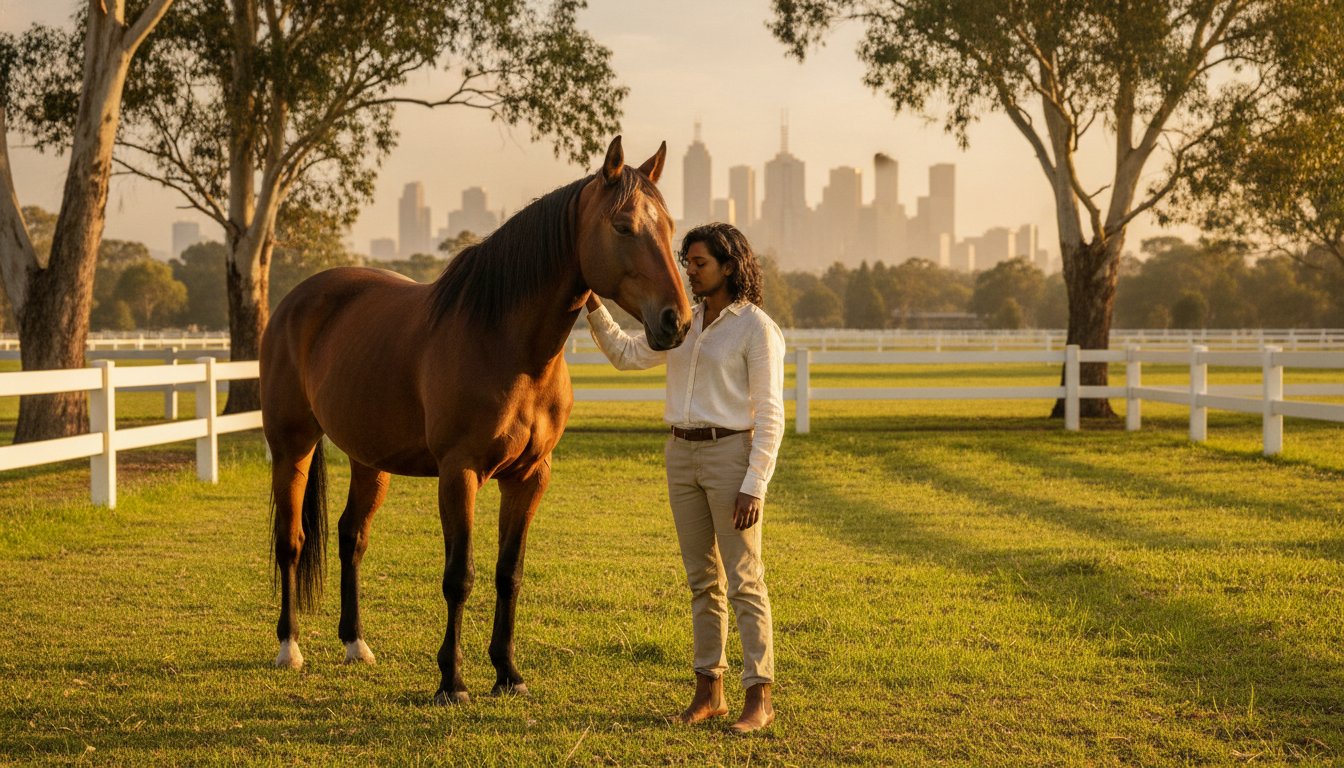

What if the most profound breakthrough in your mental health journey doesn’t happen while sitting in a sterile office chair, but while standing in a quiet paddock beside a five-hundred-kilogram animal? For many people, traditional “talk therapy” can feel stagnant or even overwhelming in busy urban clinical settings. If you’ve felt stuck in your progress or find sensory environments challenging, professional equine assisted therapy Melbourne at Jabulani Sanctuary offers a clinical alternative that prioritises your psychological safety. It’s a space where the rhythm of the farm replaces the ticking of a clock, allowing for a deeper level of connection and reflection.
We understand that finding NDIS-aligned providers who truly grasp goal-directed therapy is often a source of frustration. Our team combines the expertise of registered counsellors with the intuitive presence of horses to create a structured path toward healing. This article explores how our evidence-based approach helps participants achieve emotional regulation and process trauma away from the noise of the city. You’ll learn how this professional partnership between human and horse supports your specific NDIS capacity-building goals while providing a tranquil retreat for genuine restoration.
Key Takeaways
- Learn how professional equine assisted therapy Melbourne integrates clinical counselling frameworks with the restorative presence of horses to support mental health recovery.
- Discover the physiological science behind horse-human connection, including how somatic experiencing helps regulate the nervous system and lower stress markers.
- Understand the critical distinction between recreational riding and clinical equine therapy to ensure you select a goal-directed service led by registered professionals.
- Gain clarity on navigating NDIS funding pathways; specifically, how to utilise Capacity Building and Core Support line items for therapeutic services.
- Explore the unique benefits of the Horse Sense & Wisdom Course within a tranquil 21-acre sanctuary designed for deep reflection and personal growth.
Understanding Equine Assisted Therapy in Melbourne
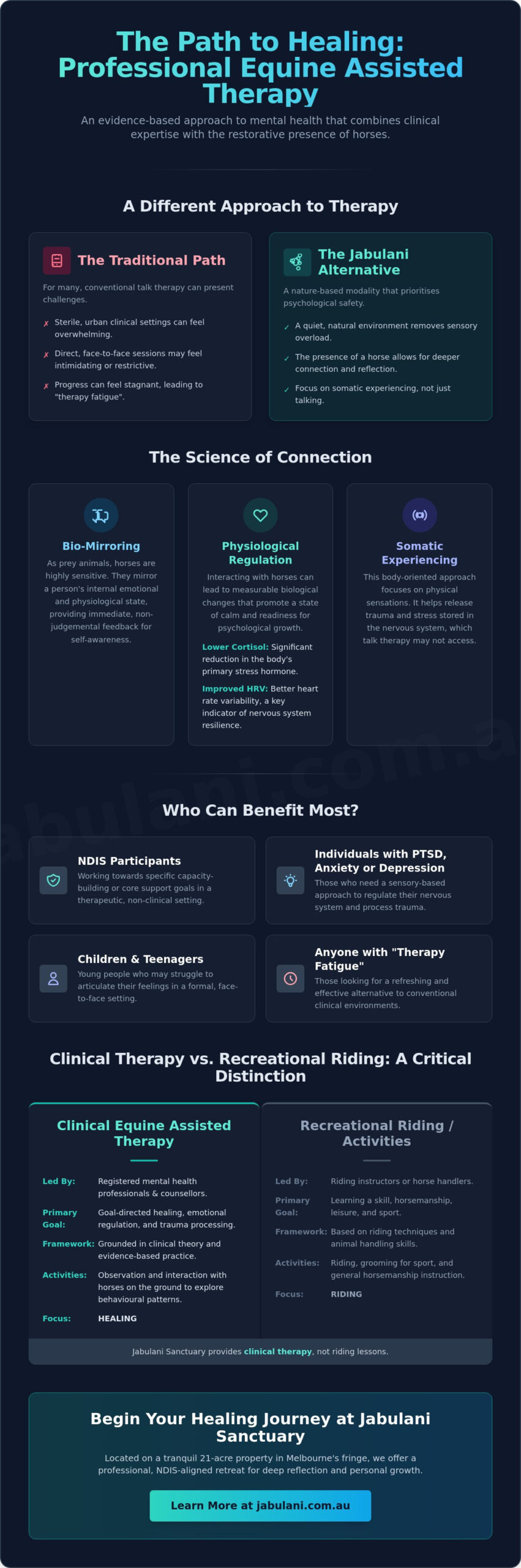
Equine assisted therapy is more than just spending time with animals; it’s a structured, clinical modality where horses act as active participants in the therapeutic process. At its core, Understanding Equine Assisted Therapy involves a partnership between a registered mental health professional, a horse, and the client. Unlike traditional office-based sessions, equine assisted therapy Melbourne takes place in an open, natural environment, allowing for a more dynamic exploration of emotional and behavioural patterns. This shift from sterile indoor clinics to nature-based interventions has gained significant traction across Victoria, as more people seek holistic ways to manage their mental health.
The choice of location is central to this healing journey. Melbourne’s fringe suburbs, such as Upper Beaconsfield, provide a vital “green space” that acts as a buffer against the sensory overload of urban life. At Jabulani Sanctuary, we’ve established a clinical path that prioritises psychological safety. It’s essential to distinguish our work from recreational activities. Our sessions are facilitated by qualified counsellors who are registered with professional bodies, ensuring that every interaction is grounded in therapeutic theory rather than riding instruction. We don’t teach you how to ride; we support you in learning how to heal.
The Role of the Horse as a Co-Therapist
Horses possess a unique biological sensitivity to their environment. As prey animals, they’ve evolved to mirror the physiological states of those around them. If a client arrives feeling anxious, a horse might respond with restlessness, providing immediate, non-judgemental feedback. This mirroring effect facilitates a level of self-awareness that is often difficult to achieve through verbal dialogue alone. The presence of such a large, calm animal also has a profound grounding effect, helping to stabilise the client’s nervous system during difficult processing.
Who Can Benefit from Horse-Assisted Support?
This modality is particularly effective for those who find traditional “face-to-face” talk therapy intimidating or restrictive. It offers a gentle entry point for:
- NDIS participants working toward specific capacity-building goals.
- Individuals managing PTSD, anxiety, or depression who require a sensory-based approach to regulation.
- Children and teenagers who may struggle to articulate their feelings in a formal setting.
- Anyone experiencing “therapy fatigue” from conventional clinical environments.
By moving the session outdoors, we remove the pressure of direct eye contact and the constraints of four walls. This creates room for genuine connection and growth in a way that feels safe and supported.
The Science of Connection: How Equine Therapy Works
While the setting at Jabulani Sanctuary is inherently tranquil, the mechanisms driving our sessions are rooted in rigorous clinical psychology. Professional equine assisted therapy Melbourne leverages somatic experiencing, a body-oriented approach to healing trauma and chronic stress. By focusing on physical sensations rather than just cognitive thoughts, clients can access deeper layers of their subconscious that traditional talk therapy often misses. Research indicates that interacting with horses can lead to measurable physiological changes, including a significant reduction in cortisol levels and an improvement in heart rate variability. These biological markers suggest that the presence of a horse helps the human body return to a state of homeostasis, creating a fertile ground for psychological growth.
Central to this process is the concept of “attunement.” This is the subtle, non-verbal alignment between the client, the horse, and the counsellor. Horses are masters of reading intention and energy; they respond to a person’s internal state before a word is ever spoken. The growth of equine therapy as a recognised intervention highlights how modern psychology is embracing these animal-assisted connections to reach outcomes that are both profound and evidence-based. This isn’t about “magic”; it’s about the biological reality of how two nervous systems can influence and regulate one another.
Regulation and Polyvagal Theory in the Paddock
Through the lens of Polyvagal Theory, horses help clients transition from a state of “fight or flight” into a “social engagement” state by providing a safe, co-regulatory presence. Our registered counsellors facilitate this shift by helping you identify when your nervous system is becoming dysregulated and using the horse’s calm energy to anchor you back to the present moment. The expansive, open environment of our sanctuary further enhances this sensory regulation, offering a quiet space where the brain can process information without the persistent “noise” of urban life. If you’re ready to explore this physiological path to recovery, our individual equine assisted sessions provide a structured, clinical starting point.
Building Life Skills Through Equine Interaction
Working with horses naturally demands the development of clear, consistent boundary-setting. A horse won’t respect a boundary that is inconsistent or timid; therefore, learning to communicate your needs to a five-hundred-kilogram animal translates directly into healthier human relationships. This interaction fosters profound empathy and non-verbal communication skills. As you successfully navigate tasks with your horse, you build a genuine sense of self-efficacy and confidence. These aren’t just farm-based activities; they’re transferable life skills that empower you to navigate the complexities of daily life with newfound resilience and clarity.
Clinical Therapy vs. Recreational Riding: Key Differences
One of the most persistent misconceptions about horse-based interventions is the idea that they are simply a “pony ride” or a form of recreational hobby riding. While being in the saddle can be enjoyable, equine assisted therapy Melbourne at Jabulani Sanctuary is a strictly clinical practice. We do not offer recreational riding lessons. The primary distinction lies in the intention and the facilitator; while a riding instructor focuses on horsemanship and technical skill acquisition, our registered counsellors focus on your psychological well-being and NDIS-aligned therapeutic goals. Every session is a structured, goal-directed intervention designed to foster emotional growth rather than equestrian proficiency.
Professional legitimacy is the cornerstone of our approach. In a clinical setting, your facilitator is not just a horse handler; they are a mental health professional registered with bodies such as the Australian Counselling Association (ACA) or the Psychotherapy and Counselling Federation of Australia (PACFA). This ensures that the support you receive is underpinned by ethical frameworks, trauma-informed practices, and a deep understanding of human psychology. When you choose a clinical path, you’re engaging in a legitimate form of mental health care that just happens to take place in a paddock instead of a room.
Why We Work on the Ground, Not in the Saddle
At Jabulani Sanctuary, we work almost exclusively on the ground. Activities like grooming, leading, or simply observing the horse from a distance are often more therapeutically potent than riding. This eye-to-eye positioning shifts the power dynamic; you aren’t “on top” of the animal in a position of control, but rather standing beside them as an equal. This level playing field encourages vulnerability and genuine connection. Because our focus is on the relationship rather than the ride, no previous horse experience is required. You don’t need to know how to tack up or trot to experience a profound breakthrough.
Professional Standards and Ethical Care
Our commitment to excellence extends to the ethical treatment of our horses. We view them as sentient partners and co-facilitators, not as tools for human use. This partnership requires a high level of trauma-informed care for both the client and the animal. We maintain rigorous safety protocols that distinguish our professional therapy from casual farm visits, ensuring a stable and predictable environment for recovery. By prioritising the welfare of our horses, we create a sanctuary where peace is shared, and the quiet strength of the animal provides a secure base for your own healing journey.
Navigating NDIS Funding for Equine Assisted Therapy
Understanding how to fund your sessions is often the final hurdle to beginning your recovery journey. For those with an NDIS plan, professional equine assisted therapy Melbourne is a legitimate and recognised support, provided it is delivered by a registered mental health professional. At Jabulani Sanctuary, we work with Self-Managed and Plan-Managed participants to ensure their therapeutic journey aligns with their broader NDIS objectives. Typically, these services are billed under Capacity Building – Improved Daily Living or Core – Therapy Supports, depending on how your funding is structured and the specific goals outlined in your plan.
Your therapy goals must be the compass for your sessions. Whether you are working toward increased social participation, improved emotional regulation, or developing life skills for greater independence, the interaction with horses provides a practical, real-world environment to test and refine these abilities. To ensure a smooth process with your Plan Lead or Support Coordinator, it’s helpful to have a clear case for why this modality is the right fit for you. Consider the following checklist when preparing for your next meeting:
- Identify which specific NDIS goals (e.g., “improving community connection”) the therapy will address.
- Confirm the provider’s registration status with professional bodies like the ACA or PACFA.
- Request a quote or service agreement that clearly states the NDIS line items being used.
- Highlight why a nature-based, sensory-friendly environment is more effective for your needs than a traditional office.
Individual vs. Group NDIS Sessions
We offer both individual and group formats to cater to different stages of healing. Individual sessions are often preferred for deep trauma work, where a one-on-one partnership with the counsellor and horse allows for intense focus and personal safety. Conversely, our group sessions are excellent for fostering social participation and community. These small, supportive groups at Jabulani Sanctuary provide a space for shared healing, where participants can learn from one another’s experiences while practicing social boundaries in a low-pressure, outdoor setting. Learn more about our NDIS group therapy Melbourne sessions to see which format aligns with your current capacity.
How to Request Equine Therapy in Your Plan
To qualify for funding, the support must meet the NDIS “Reasonable and Necessary” criteria, meaning it must be directly related to your disability and represent good value for money in achieving your specific life goals. We place a high priority on professional accountability; therefore, our counsellors provide detailed progress reports for your plan reviews. These reports document your growth and demonstrate how the equine-assisted sessions are helping you meet your functional milestones. If you’re ready to start, you can contact us for guidance on NDIS-aligned support and how to integrate our services into your plan.
Healing at Jabulani Sanctuary: A Professional Retreat Setting
The physical environment where healing occurs is often as significant as the therapeutic modality itself. While many urban providers operate from smaller, confined plots, Jabulani Sanctuary spans 21 acres of rolling hills in Upper Beaconsfield. This expansive scale is intentional. It provides a genuine sense of seclusion and psychological safety that is rarely found in city-based clinics. Sprawling paddocks and quiet bushland trails offer a restorative backdrop for equine assisted therapy Melbourne, ensuring that your sessions are never interrupted by the hum of traffic or the pressure of a crowded waiting room. It’s a space designed for deep, uninterrupted reflection.
Our sanctuary is led by Deb, a registered counsellor whose approach perfectly mirrors the brand’s ethos of “clinical yet nurturing.” She brings a steady, professional authority to every session, ensuring that while the setting is soft and supportive, the therapeutic work remains grounded in evidence-based practice. For those seeking a more structured path to personal growth, we offer the Horse Sense & Wisdom Course. This programme provides a clear framework for developing self-awareness and emotional intelligence, guided by the intuitive feedback of our resident horses. It isn’t just about spending time on a farm; it’s about engaging in a deliberate process of self-discovery led by an expert guide.
The Immersive Farm Stay Experience
For many clients, a one-hour session is only the beginning. We’ve found that the peaceful rural environment of Upper Beaconsfield acts as a powerful catalyst for the therapeutic process. To support this, we offer a therapeutic farm stay Victoria residents can access to fully immerse themselves in the rhythm of the sanctuary. Staying on-site provides a vital “reset” away from Melbourne’s persistent urban stressors, giving your nervous system the time it needs to truly settle. These stays are designed to complement your active therapy sessions, offering a quiet retreat where you can process your breakthroughs in a space of total tranquility. It’s an opportunity to step out of your daily routine and into a dedicated environment of restoration.
Start Your Journey in Upper Beaconsfield
Taking the first step toward a new way of healing is a significant decision. We make the process transparent and straightforward, starting with an initial consultation to discuss your specific needs and goals. Whether you’re an individual seeking support or a health professional looking for facility hire to support your own clients, our doors are open. We pride ourselves on being a hospitable and ethical practice that prioritises your well-being above all else. You don’t have to navigate your recovery in a sterile, high-pressure environment. Instead, you can choose a clinical path that feels as natural as the world around you. Book your individual equine assisted session in Melbourne today and experience the quiet strength of healing in a true sanctuary.
Step into a Space of Sustainable Growth
Choosing a therapeutic path is a deeply personal decision that requires both trust and professional assurance. We’ve explored how a clinical approach to equine assisted therapy Melbourne differs from recreational activities by focusing on your specific NDIS goals and physiological regulation. By partnering with registered counsellors who are members of the ACA or PACFA, you ensure your healing journey is supported by ethical standards and trauma-informed expertise. This isn’t about temporary relief; it’s about building resilient life skills within a structured, clinical framework that respects your individual pace.
The 21-acre sanctuary in Upper Beaconsfield offers more than just a beautiful view. It provides the psychological safety and quietude necessary for profound nervous system restoration away from urban stressors. Whether you’re navigating trauma, managing anxiety, or working toward NDIS capacity-building milestones, the presence of a horse and the guidance of a professional can illuminate the way forward. You don’t have to stay stuck in traditional settings that no longer serve your needs. Begin your healing journey at Jabulani Sanctuary—Book a Consultation. We’re here to walk alongside you as you rediscover your strength in the company of our gentle herd.
Frequently Asked Questions
Is equine assisted therapy covered by NDIS in Melbourne?
Yes, equine assisted therapy in Melbourne is a recognised support that can be funded through your NDIS plan if it aligns with your specific goals. At Jabulani Sanctuary, we work with self-managed and plan-managed participants, typically billing under Capacity Building (Improved Daily Living) or Core Support categories. It’s essential that the service is delivered by a registered counsellor to meet NDIS compliance and quality frameworks.
Do I need to know how to ride a horse to participate?
No previous horse experience or riding skills are required because our sessions are entirely ground-based. We focus on activities such as grooming, leading, and observing the horses from a safe, eye-to-eye position. This approach ensures the therapy is accessible to everyone, regardless of their familiarity with animals, and prioritises emotional connection over technical equestrian skill.
What should I wear to an equine therapy session at Jabulani Sanctuary?
You should wear comfortable, weather-appropriate clothing and sturdy, closed-toe footwear such as boots or sneakers. Because our sanctuary is a working farm environment in Upper Beaconsfield, we recommend layers to manage the changing Victorian weather. For safety reasons, sandals, thongs, or high heels aren’t suitable for sessions in the paddock.
How is horse therapy different from standard counselling?
While standard counselling usually occurs within four walls, horse-assisted therapy utilises the outdoors and the horse’s intuitive feedback to regulate the nervous system. The horse acts as a co-therapist, mirroring your internal state and providing immediate, non-judgemental responses. This somatic approach helps process trauma and emotions that might be difficult to articulate in a traditional “talk therapy” setting.
Can children with autism access equine assisted therapy?
Yes, children and teenagers with autism often find our sessions particularly beneficial for developing emotional regulation and social communication skills. The sensory-rich yet calm environment of the sanctuary provides a safe space for neurodivergent participants to explore boundaries and connection. Our registered counsellors tailor each session to the child’s unique sensory needs and NDIS capacity-building objectives.
How many sessions of equine therapy are usually recommended?
The number of sessions varies depending on your individual goals, but many participants find that an initial block of six to ten sessions allows for meaningful progress. Some clients choose to engage in long-term support for ongoing trauma processing, while others participate in our structured Horse Sense & Wisdom Course. We’ll discuss a tailored plan during your initial consultation to ensure it meets your specific needs.
Is Jabulani Sanctuary accessible for people with limited mobility?
Jabulani Sanctuary is a rural 21-acre property with varying terrain, but we strive to make our sessions as inclusive as possible. While some areas of the paddock may be uneven, we can often adapt the location of the session to suit those with limited mobility. We encourage you to contact us before your first visit so we can discuss your specific requirements and ensure a safe, accessible experience.
What happens if it rains during my scheduled session?
If weather conditions become unsafe or highly uncomfortable, we’ll contact you to discuss rescheduling your session. However, light rain doesn’t usually stop us, as we have sheltered areas available and the horses are quite comfortable in the elements. We always prioritise your physical and psychological safety when making decisions about weather-related changes.